Palo Alto SAT • ACT • PSAT Tutoring
SAT, ACT & PSAT Tutoring in Palo Alto, CA
“In his first session, Michael determined our son was much better suited for the ACT than the SAT. A few months later he scored a 34 out of 36.”
— Marcella, Palo Alto parent · Palo Alto High School

Why Palo Alto Families Choose Mr. Test Prep
College admissions officers know exactly where applicants come from. A 1450 SAT or a 34 ACT from a small town reads very differently than those same scores from Palo Alto. The competitive floor at PALY, Gunn, Castilleja, Sacred Heart, and Menlo School is not the national average — it is the Palo Alto average, and that is a categorically different standard.
Students across this corridor are competing against each other, and against every high-achieving applicant from the most demanding ZIP codes in California. A score that would be excellent almost anywhere else is ordinary here.
There is a second constraint that shapes how preparation needs to work in this environment. Palo Alto students are already running at capacity: AP coursework, athletics, music, leadership, extracurriculars. A prep program that adds homework to that load is working against the student, not for them.
Michael Romano — Mr. Test Prep — has been working in this environment since 1997. In nearly three decades he has worked with more than 4,000 students, the majority from the Bay Area. He knows what Palo Alto students are carrying. He built his program around it.
The First Decision: Which Test?
Michael diagnoses SAT-vs-ACT fit during the free trial. Most families assume the SAT when the ACT would produce a higher score — the data decides.
Most Palo Alto families assume their student should take the SAT. For some, that assumption is correct. For others it costs months — time spent preparing for the wrong test before someone suggests trying the ACT and the score moves immediately. The SAT and ACT reward different strengths. The diagnostic during the free trial is specifically designed to answer this question based on where the student actually performs.
Both tests have changed — and that changes the answer
The ACT changed significantly in 2025: Science is now optional and does not count toward the composite, and testing time dropped to roughly two hours. The SAT is now fully digital and section-adaptive. Both changes affect which test is the better choice for a given student — and the recommendation Michael makes at the end of every trial session reflects those current formats.
For many students, PSAT preparation is the front end of this decision. The PSAT/NMSQT is taken in October of junior year and is scored on a scale closely aligned with the SAT, making it one of the strongest early indicators of future SAT performance.
When Palo Alto Students Should Start — and How to Sequence
January of sophomore year is the ideal start for all three tests. Most students who come to Michael are juniors or seniors — and he builds a specific plan for exactly where they are.
The academic preparation at PALY, Gunn, Castilleja, Sacred Heart, Menlo School, and the other rigorous schools across this corridor means most students can begin building a foundation earlier than their peers nationally. Michael works with students as early as January of sophomore year — not to rush toward a test date, but to develop the habits, frameworks, and mental preparation that take time to build.
PSAT
For the PSAT, preparation should begin no later than the summer before junior year. The PSAT/NMSQT is a one-shot test — there is no retake. California’s Selection Index cutoff is among the highest in the country, which makes focused, early preparation necessary for students targeting National Merit recognition.
SAT
For the SAT, Michael has rarely seen a student perform well before August of junior year. The material may be there. The maturity to execute under real test conditions usually isn’t yet. The right sequence for most Palo Alto students: begin in January of sophomore year, target August or October of junior year as the first SAT date, and use December and March as additional attempts if needed.
ACT
The ACT follows a similar arc. September, October, or December of junior year is the realistic first attempt for students who begin in sophomore year. That leaves April, June, and the senior-year dates as runway if needed.
Most students who come to Mr. Test Prep are juniors or seniors. Juniors have multiple attempts and real runway. Seniors have a focused window — narrower, but workable with the right plan. Michael’s trial session produces a specific recommendation for each student based on exactly where they are right now.
What Each Test Requires in 2026
The Digital SAT
The SAT is now section-adaptive — strong Module 1 performance unlocks harder questions where the points live for students targeting 1500+.
The SAT is now a digital, section-adaptive test. The format rewards students who execute cleanly under pressure on the first 27 questions of Reading and Writing and the first 22 questions of Math. Early questions are not warm-ups — they are gatekeepers. Strong Module 1 performance unlocks the harder Module 2, where the points live for students targeting 1500 and above.
Momentum is built into the scoring engine. That places a significant premium on the mental and tactical readiness Michael’s program is designed to deliver.
The Enhanced ACT
Science no longer counts toward the ACT composite score; the test is now two hours — shorter, more concentrated, and punishing of brief focus lapses.
For students targeting 33 and above from schools across this corridor, preparation needs to reflect the current format.
The PSAT / NMSQT
The California Selection Index cutoff is among the highest in the nation — students at PALY and Gunn are competing in one of the toughest state pools in the country.
The October PSAT is not a practice run for juniors at PALY, Gunn, Castilleja, Sacred Heart, and Menlo School. It is the only test that qualifies for National Merit recognition. One shot, mid-October, taken at school surrounded by classmates.
The California Selection Index cutoff consistently ranks among the highest in the nation. A score that earns National Merit recognition in many states will not cut it here. Michael has worked with Palo Alto students on PSAT preparation since 1997 and has helped students achieve National Merit Semifinalist, Finalist, and Scholar status.
What Makes This Program Different: The Mr. Test Prep Method™ and A-Game Access™
For most Palo Alto students, the gap between the diagnostic score and the target is not content knowledge — it is execution under pressure. That is exactly what these two systems address.
For most students across this corridor, the academic foundation is already there. What determines the final score is execution — how a student performs under time pressure, manages decisions, and accesses everything they have prepared when it counts. Michael’s answer is two proprietary systems developed and refined over nearly three decades of working with Bay Area students.

The Mr. Test Prep Method™
The Mr. Test Prep Method™ is a system of frameworks and tactics built around one core insight: most students who plateau below their target aren’t held back by what they don’t know — they’re held back by how they perform under pressure. Three core concepts appear across SAT, ACT, and PSAT preparation.
A-Game Access™
A-Game Access™ is the peak-performance and mindset system. Performance doesn’t disappear under pressure — access to it does. A-Game Access™ trains students to restore that access quickly and consistently, whether it’s the gap between SAT Module 1 and Module 2, a hard question in the middle of the ACT, or test morning at school on PSAT day.
How Both Systems Work Together
Together, the two systems address both sides of the performance equation — not just content knowledge, but the mental and tactical readiness to deploy it when it counts.
Built for How Palo Alto Students Actually Live
No Homework. Everything Happens in the Session.
Every minute of preparation happens inside timed sessions on Zoom — no homework is assigned, because unsupervised practice at 11 PM is not replicating real test conditions.
Palo Alto students do not have spare hours. Unsupervised practice sets done late at night compete with sleep, AP work, and everything else that goes into a competitive application. The digital SAT cannot be authentically practiced under casual conditions — a student doing Bluebook practice on their laptop with the door open is not replicating the test. The same is true for ACT and PSAT preparation. All work happens inside the session — under timed conditions, on real test material, with immediate feedback. That is where meaningful improvement occurs.
The Score Satisfaction Guarantee
If a student completes the agreed program and hasn’t reached their target, they keep coming at no additional cost.
In Palo Alto, the scores students need to be competitive are not just high — they are elite. Even students who do everything right can have a test day where it doesn’t come together. The guarantee makes sure that scenario never becomes the end of the road: complete the agreed program and you keep coming at no additional cost until you’re where you need to be.
The guarantee is also part of the strategy. Students who know they have another shot carry less pressure into each test. Less pressure means better access to everything they have prepared. Given enough attempts and the right preparation, the outcome becomes increasingly inevitable.
Schools We Serve in Palo Alto and Nearby
Mr. Test Prep works with students from PALY, Gunn, Castilleja, Sacred Heart, Menlo School, and the broader corridor from Los Altos to Atherton.
- Palo Alto High School (PALY) — where 1400 SAT is a floor, not a ceiling, for competitive applicants to the UCs and selective privates; National Merit outcomes documented across nearly three decades.
- Henry M. Gunn High School — consistently produces National Merit Semifinalists; students frequently take both tests, and Michael recommends which score to lead with.
- Castilleja School — independent school in Palo Alto where college counselors actively recommend early test prep and top-25 college outcomes are standard.
- Kehillah Jewish High School — small Palo Alto school with high college aspirations; students benefit from the individualized approach.
- Sacred Heart Preparatory, Atherton — minutes from Palo Alto; significant family overlap with Mr. Test Prep documented across multiple years.
- Menlo School, Atherton — serves families across the Palo Alto, Atherton, and Menlo Park corridor.
- Menlo-Atherton High School — the public option across the corridor from Menlo School and Sacred Heart; one of the longest-running sources of Mr. Test Prep students on the Peninsula.
- Los Altos High School — consistent high-achieving student base with strong documented college placement outcomes.
- Pinewood School, Los Altos Hills — small independent school whose students apply into the same competitive pool as the far larger Palo Alto publics.
- Mountain View High School — shares a district with Los Altos High; the same PSAT-to-SAT timeline applies at both.
- Saint Francis High School, Mountain View — Catholic school drawing from across the mid-Peninsula and South Bay; the no-homework format matters most to students carrying a full extracurricular load.
What Families Are Saying
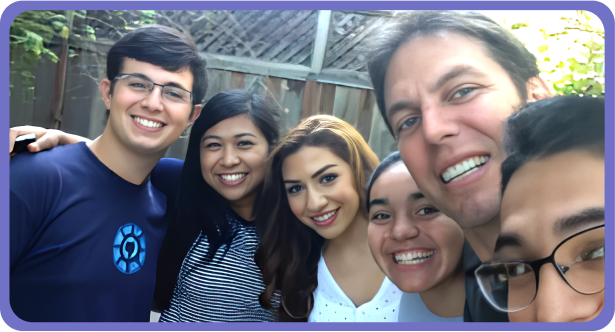

“By the time we found Michael we had already spent thousands of dollars on group classes and individual tutoring with nothing to show for it. In his first session, Michael determined our son was much better suited for the ACT than the SAT. A few months later he scored a 34 out of 36. We have two more kids coming up, and Michael will be our first and only stop.”
“We tried several approaches, including a private tutor from Princeton Review, and it made almost no difference. Michael quickly recognized that what my son needed most was confidence. He started at the end of junior year with a 1130 and finished at 1410 — and received eight scholarship offers.”
“In the first thirty minutes of the trial session, Michael told me I was probably better suited for the ACT. He was right — I scored significantly higher. He also helped me prepare for the PSAT, and I became a National Merit Scholar. I definitely could not have done it without him.”
“Before working with Michael I had never studied for the SAT or ACT and didn’t know which one made sense for me. He helped me figure that out, then focused on exactly the skills I needed. I went from dreading the whole process to genuinely appreciating it.”
“Michael’s approach is unlike anything I’d tried before. By doing all the work in the sessions, I could actually evaluate my thinking and fix my mistakes in real time. As someone who struggled with test anxiety, the meditation piece changed everything — I felt calmer, more confident, and more focused. I improved my score by about 350 points.”
Test Dates and Locations for Palo Alto Students
SAT and ACT test centers in Palo Alto fill four to six weeks before test day — register early. Nearby SAT and ACT sites include PALY, Gunn, and Mountain View High School.
PSAT is administered mid-October at school — no external registration. Only the junior year PSAT/NMSQT qualifies for National Merit. Tenth graders may take the PSAT 10 as a diagnostic baseline; it does not count for National Merit.
Verify current SAT dates at collegeboard.org and ACT dates at act.org.
Frequently Asked Questions
How much does SAT, ACT, or PSAT tutoring cost in Palo Alto?
Sessions are $400 for two hours, billed pay-as-you-go at the end of each session — no long-term commitment required.
After the free trial, Michael presents a recommendation including a session count and total estimate for your student’s specific situation. Students who complete the program and haven’t reached their target keep coming at no additional cost.
Should my student take the SAT or ACT?
This is determined during the trial session diagnostic, based on actual performance data — not on which program is easier to sell.
Michael has seen students move significantly higher on one test than the other. The PSAT, scored on an SAT scale, often reveals useful signals about which test fits better.
How is the Enhanced ACT different from the old test?
Science is now optional and does not count toward the composite score, and testing time dropped to approximately two hours.
The format is shorter and more concentrated, which changes both preparation strategy and pacing decisions on test day.
What is the California PSAT cutoff and why does it matter?
The NMSQT Selection Index cutoff in California is among the highest in the nation.
Juniors at PALY, Gunn, Castilleja, Sacred Heart, and Menlo School are competing in one of the most demanding state pools in the country. A score that qualifies for National Merit recognition in most states will not reach the California cutoff. Precise preparation matters here in a way it does not in most other states.
How long does test prep take for Palo Alto students?
It depends on where a student is starting from and which tests they are preparing for.
Students who begin in sophomore year build their foundation over a longer arc. Juniors with a specific test date typically follow a focused three-month timeline from the diagnostic to that date. The trial session produces a specific recommendation for each student based on where they are and where they need to go.
Are sessions online? How does that work for students in Palo Alto?
All sessions are conducted on Zoom.
The online format removes commute time and fits around the demanding schedules across the Palo Alto corridor — no driving to a tutoring center after school. Michael coaches each student in real time on Zoom, and the timed practice is often done alongside other students. The digital SAT is practiced on the actual Bluebook interface inside the session.
What makes Mr. Test Prep different from other Palo Alto test prep options?
One instructor — not a rotating staff of tutors — with nearly three decades of Bay Area experience.
Michael Romano has been working with Bay Area students since 1997 and has worked with more than 4,000 students. No homework. Proprietary systems in the Mr. Test Prep Method™ and A-Game Access™ that address execution under pressure, not just content. A score satisfaction guarantee. And the specific experience of knowing what Palo Alto students are carrying when they walk into a session.
Where do Palo Alto students take the SAT and ACT?
Typically at Palo Alto High School (50 Embarcadero Rd) or Gunn High School (780 Arastradero Rd).
Mountain View High School (3535 Truman Ave) is a reliable backup approximately ten minutes away. Menlo-Atherton High School (2601 Middlefield Rd, Atherton) is an option for families in south Palo Alto. Bay Area centers fill four to six weeks before test day — register early.
Book Your Free 2-Hour Trial Session
Meet Mr. Test Prep — Free Two-Hour Trial Session
The best way to understand the program is to experience it.
The trial is a two-hour online session. Your student will get to know Michael, work through a diagnostic with guidance and check-ins along the way, and leave with a clear starting point. No pressure — this is simply a chance to get started.
Michael will follow up afterward with a specific plan: which test to prioritize (or both), a target score, a proposed timeline, and a session count based on your student’s situation. The trial is free with no obligation to continue.
Also Serving the Following Areas
- Menlo Park, Woodside, Portola Valley
- Los Altos, Mountain View
- Sunnyvale
- San Jose, Santa Clara, Cupertino, Los Gatos
- Redwood City, San Mateo
- SAT, ACT & PSAT Tutoring in the Bay Area
- Online Tutoring Nationwide