Online SAT • ACT • PSAT Tutoring
Online SAT, ACT & PSAT Tutoring Nationwide

The Mr. Test Prep Difference — What Sets Mr. Test Prep Apart?
The most competitive SAT prep market in the United States is the San Francisco Bay Area. The schools feeding into UC Berkeley, Stanford, and the Ivies from Palo Alto, Cupertino, and Menlo Park produce some of the highest concentrations of National Merit Semifinalists in the country. Michael Romano — Mr. Test Prep — has been working with those students since 1997. Since 2020, he has worked with Bay Area families and families across the country exclusively on Zoom.
That shift was not forced by circumstances. Michael’s outcomes improved after going online. Removing commute time, running sessions from the student’s home environment, and eliminating the logistics of in-person scheduling produced better results. That is an uncommon claim among tutors — and it is reflected in hundreds of testimonials from families who went through the full program.
If your student is in Plano, Texas or Newton, Massachusetts or Bergen County, New Jersey, the testing pressure they face is real and the college admissions stakes are identical to what Bay Area families navigate. The program is the same. Michael Romano is the tutor. The diagnostic, the no-homework sessions, the Mr. Test Prep Method™, A-Game Access™, and the score satisfaction guarantee apply regardless of your zip code.
The SAT, ACT & PSAT Landscape for High-Achieving Students
The SAT and ACT have returned to center stage. After several years of test-optional policies at many selective universities, MIT, Yale, Dartmouth, and the University of Texas system have reinstated standardized testing requirements. Harvard followed. Princeton is test-optional until the 2027–28 cycle. The University of California system is test-blind, so its campuses see no scores at all for admission or for their own awards, though the Regents revisit that policy by June 2027. The practical reality for families today: a strong test score is no longer optional for students targeting competitive universities, and a weak score actively hurts an application that might otherwise be competitive.
The SAT is now digital — adaptive modules, 2 hours 14 minutes, no long reading passages. The ACT changed significantly in 2025 — Science is now optional and does not count toward the composite score, and total testing time dropped from nearly three hours to approximately two. The PSAT, administered every October in 11th grade, is the only test that qualifies students for National Merit recognition. It happens once. There is no retake.
What the National Merit cutoff actually means
The National Merit Semifinalist Selection Index cutoff varies by state and shifts slightly year to year — but the pattern is consistent: the states with the highest concentrations of high-achieving students have the highest cutoffs, and the gap between a strong student and a Semifinalist is typically 15–25 PSAT points. Focused preparation closes that gap.
Families in the top testing markets — DFW suburbs in Texas, Bergen County in New Jersey, Westchester in New York, Fairfax County in Virginia, Chicago’s North Shore — are navigating the same competitive reality Bay Area families have navigated for decades. The students are equally capable. The strategic information about how to prepare is not always equally accessible.
Why Bay Area expertise transfers nationally
Michael Romano has spent nearly three decades in the most pressure-tested SAT prep environment in the country. The diagnostic skills, session structure, SAT-vs-ACT recommendation process, the Mr. Test Prep Method™, and A-Game Access™ he developed working with students across the Palo Alto corridor transfer directly to a student in Naperville, Illinois or McLean, Virginia. High-achieving students share the same error patterns, the same test anxiety profiles, and the same timing problems regardless of zip code.
How Online SAT, ACT, and PSAT Prep Works With Mr. Test Prep
The program starts with a free two-hour trial session on Zoom. Not a discounted first session — a genuinely free session with no financial commitment. During the trial, Michael administers a diagnostic and works directly with the student to understand their current scoring profile: which sections are limiting their total score, where they are losing points they should not be losing, and how they perform under timed conditions.
After the trial, Michael follows up with both the parent and student. He presents a formal proposal: which test to prioritize, how many sessions to plan for, a target score, and a timeline built around upcoming test dates. There is no financial commitment until that conversation happens and both sides agree.
Session structure
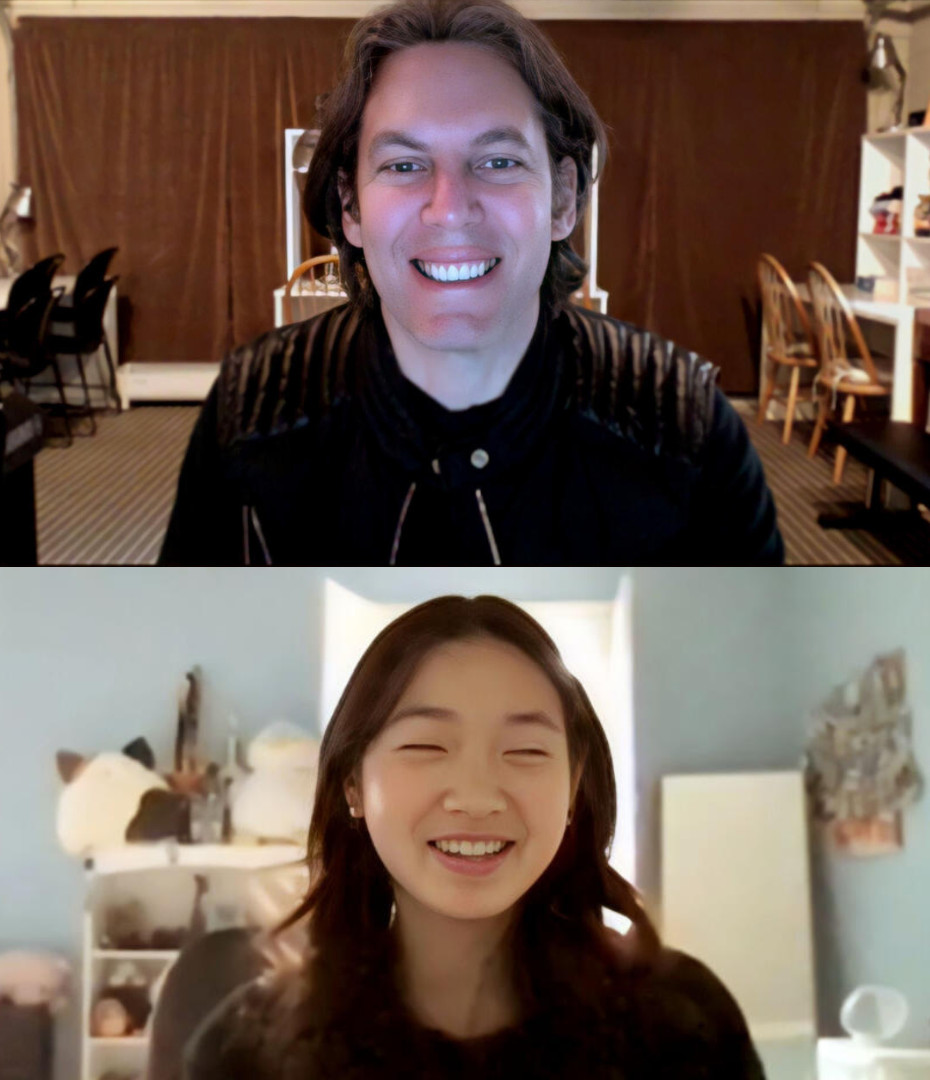
Each session runs two hours on Zoom, with Michael coaching each student in real time as they work. That is where the Mr. Test Prep Method™ and A-Game Access™ get applied, to the specific patterns and performance issues that student needs to address. The timed practice is often done alongside other students, which is where the work gets tested under real pressure.
No homework — and why
There is no homework in this program. This is a deliberate response to two realities. First, high-achieving students do not have spare hours — unsupervised practice sets compete with everything else that goes into a competitive application. A program that adds to that load is working against the student, not for them. Second, standardized tests cannot be authentically practiced under casual conditions. A student doing practice at home with distractions nearby is not replicating what test day actually feels like. They are practicing a different test. Everything in Michael’s program happens inside the session — under timed conditions, working through real test material, with immediate feedback. That is where meaningful improvement occurs.
SAT vs. ACT — the recommendation
Students do not need to decide which test to take before the trial. Michael assesses both options during the diagnostic and makes a specific recommendation based on how the student actually performed. This recommendation is part of the free trial.
The Mr. Test Prep Method™ and A-Game Access™
Every session integrates the Mr. Test Prep Method™ — a performance framework of tactics and concepts that addresses how students think, decide, and execute under pressure — and A-Game Access™, a peak performance and mindset system built on mindfulness and meditation. Test anxiety is a documented factor in score underperformance for students who do well on practice tests but underperform on test day. A-Game Access™ addresses that directly. Multiple testimonials on mrtestprep.com specifically cite the mindfulness component as a contributor to their student’s final score.

Why online works better — not just as well
Michael Romano moved exclusively to Zoom in 2020. His outcomes improved after that transition. Removing commute time creates recovery time before a weeknight session. Running sessions in a student’s home environment reduces the anxiety of traveling to an unfamiliar location. These are not theoretical benefits. They are reflected in hundreds of outcomes documented since 2020.
Documented Outcomes
The outcomes below are drawn from the Mr. Test Prep testimonials.
Outcome 1
San Mateo High School, California
A student came in performing well on practice tests but freezing on the real thing. Working with the A-Game Access™ mindfulness practice, something shifted. On test day she was unusually calm. She walked out with a 35 on the ACT.
Outcome 2
Palo Alto High School, California
A PALY student came in feeling overwhelmed by the SAT. No homework, no pressure — just clarity and a method that worked. She improved her score by approximately 350 points and left with confidence that extended well beyond test day.
Outcome 3
Menlo-Atherton High School, California
A student came to the trial session undecided between the SAT and ACT. After the diagnostic, Michael identified which test gave her the better opportunity. Her ACT score improved by 7 points. She enrolled at Vanderbilt University.
Three different schools, three different stories — SAT, ACT, and the performance gap all represented.
Stuck, Underperforming, or Aiming Higher?
The method matters. If a student is working hard but not getting results, that is usually a systems problem, not a potential problem.
Students We Work With Across the Country
Mr. Test Prep serves high-achieving students anywhere in the United States. The Zoom format means geography is not a constraint — session quality, diagnostic depth, and instructor continuity are identical whether a student is in California or Connecticut.
Texas — DFW and Houston Suburbs
Texas produces more National Merit Semifinalists than any state except California and New York. The high schools feeding this volume — Plano Senior, Frisco, Allen, Seven Lakes, The Woodlands — are academically rigorous environments where a 1500+ SAT score is a competitive baseline, not a ceiling. Families here research tutor credentials carefully before committing and respond to documented individual outcomes over program marketing.
New Jersey — Bergen, Middlesex, and Morris Counties
New Jersey has one of the highest National Merit rates per capita in the country. Bergen County Academies, Westfield High School, and Ridge High School consistently produce Semifinalists. Families here compare tutor outcomes directly and value continuity of instruction. The online format is fully established — Zoom sessions fit school schedules without adding commute time.
New York — Westchester, Long Island, and NYC
Stuyvesant, Bronx Science, Great Neck North, Syosset, Scarsdale — the testing culture in the New York metro is among the most competitive in the country. Ivy admission pressure is visible and constant. Families specifically seek individual tutors with documented outcome data rather than large programs with rotating instructors.
Virginia — Fairfax County and the DC Metro
Thomas Jefferson High School for Science and Technology in Fairfax County produces more National Merit Semifinalists than almost any school in the United States. McLean, Langley, and Westfield operate in the same high-pressure admissions environment. Government and tech employee families in this corridor have high expectations for tutor credentials and documented outcomes.
Illinois — Chicago North Shore and Naperville
Northwestern and the University of Chicago create a visible local standard for academic achievement. The high schools in Naperville, Evanston, Barrington, and Lake Forest rank among the top academic public schools in the Midwest. Families here are willing to seek out expertise when the outcome data supports the decision.
Washington State — Eastside Seattle Suburbs
Bellevue, Redmond, Mercer Island, and Sammamish have significant overlap with Bay Area tech family culture — many parents are former Bay Area residents who relocated for Microsoft or Amazon. Newport High School, Bellevue High, and Mercer Island High closely mirror the competitive prep environment Michael has worked in since 1997.
Massachusetts — Greater Boston
Newton, Lexington, Weston, and Concord are among the highest-performing public school communities in the country. Harvard’s visibility creates an Ivy prep culture that extends across the state. Massachusetts families are experienced with premium individual online instruction and value long documented experience.
Florida — South Florida Corridor
The Boca Raton, Weston, and Parkland corridor has a strong academic culture driven by private school concentration — St. Andrew’s School and Pine Crest School among them. High college aspirations and strong SAT participation make this one of the most active online tutoring markets in the Southeast.
SAT, ACT, and PSAT Test Dates — What Students Nationwide Need to Know
SAT & ACT — register on the first day registration opens
Test center availability varies by market. Bay Area centers fill 5–6 weeks before the test date. Suburban Texas and New Jersey centers fill 3–4 weeks out. Urban markets — New York, Chicago, Boston — are comparable to the Bay Area. The guidance is consistent everywhere: register on the first day registration opens.
For current SAT test dates and registration, verify at collegeboard.org. For current ACT test dates and registration, verify at act.org.
PSAT — the one-shot October test
The PSAT/NMSQT is administered at students’ own high schools every October, automatically for most 11th graders — no external registration. The test that qualifies for National Merit is the one taken in October of junior year. There is no retake. Students who want National Merit recognition have one preparation window: before that date.
Start date guidance for PSAT students targeting National Merit
Students aiming at Semifinalist recognition in competitive states should begin PSAT preparation no later than the summer before junior year. Starting in January of sophomore year is the stronger approach. The gap between starting early and starting late is typically 15–25 PSAT points of preparation upside — often the difference between a Commended Student and a Semifinalist.
Frequently Asked Questions: Online SAT, ACT & PSAT Tutoring
How much does online SAT, ACT, or PSAT tutoring cost with Mr. Test Prep?
Sessions are $400 for a two-hour session, billed pay-as-you-go at the end of each session. No long-term commitment required.
After the free two-hour trial session, Michael presents a recommendation — number of sessions, timeline, and a total estimate based on your student’s specific situation. The score satisfaction guarantee means students who complete the program but haven’t reached their target keep coming at no additional cost. The trial itself is free with no obligation. Call (650) 575-5867 or register at mrtestprep.com/free-trial.
How does online SAT tutoring work for students who are not in California?
It works exactly the same way — the Zoom format removes geography from the equation entirely.
Every session runs on Zoom. Michael works with students across the country the same way he works with Bay Area students: coaching each student in real time, with timed practice on official material often done alongside other students. Session scheduling is built around the student’s school calendar and time zone. Students in Eastern and Central time zones typically prefer afternoon and weekend slots.
How long does SAT or ACT prep take for students outside California?
The timeline is the same regardless of location — approximately three months from the trial diagnostic to the target test date is Michael’s standard recommendation, depending on starting score and target.
Students targeting the PSAT for National Merit are the exception — they should start no later than the summer before junior year, ideally in January of sophomore year.
Does every student work directly with Michael Romano, regardless of location?
Yes. Michael Romano is the only instructor for every student in the program, everywhere.
There are no associate tutors, no session substitutes, and no rotation between instructors. Every student works directly with Michael in every session. Diagnostic work builds on continuity — knowing which specific questions a student keeps missing, which error patterns repeat under timed conditions, and how a student’s performance shifts session to session. That depth is only possible when one tutor sees every session.
What is the score satisfaction guarantee and does it apply to students nationwide?
Yes, the guarantee applies to every student in the program regardless of location.
If a student completes the agreed program and is not where they need to be, they keep coming at no additional cost. Not because of fine print. Because Michael believes every student he works with is capable of getting there. The guarantee exists to make sure every student gets as many shots as it takes to get there.
What Families Say


“It was divine appointment that we found Mr. Test Prep. We gave it a try, our son Ethan loved Michael’s style and format, and it was a good fit for our family’s needs all around. Ethan sat for the SAT again after a few months of working with Michael, and his score was perfect.”
“Aside from being a great SAT tutor, Michael Romano is genuinely a cool, understanding guy. The difference is that Michael truly wants his students to succeed — and you feel that every single session.”
“My son had already taken the SAT in 10th grade and had a decent 1550 score, but we wanted to see if he could improve it. His score was perfect after a few months with Michael. The approach works.”
Also Serving the Following Areas
- SAT, ACT & PSAT Tutoring in the Bay Area
- Palo Alto & the Mid-Peninsula
Palo Alto, Atherton, Menlo Park, Woodside, Portola Valley, Los Altos, Mountain View - San Mateo & Redwood City
San Mateo, Redwood City, Burlingame, Belmont, Woodside - San Jose & the South Bay
San Jose, Santa Clara, Cupertino, Los Gatos, Saratoga, Sunnyvale
Related Test Prep Pages
Book Your Free 2-Hour Trial Session
Meet Mr. Test Prep — Free Two-Hour Trial Session
The free trial is a two-hour online session. Your student will get to know Michael and work through a diagnostic with guidance and check-ins along the way.
Afterward, Michael follows up with both the student and parent: which test to prioritize, a target score, a proposed timeline, and a session count based on your student’s specific situation.
No obligation to continue.